Anime Opening Lyrics: How to Sing Along to Your Favorite Shows
Want to sing along to anime openings? Here's how to learn your favorite anime songs using romaji, plus tips for mastering different styles from shonen battle themes to emotional ballads.
Anime Opening Lyrics: How to Sing Along to Your Favorite Shows
You can sing along to anime openings by using romaji — phonetic Japanese spelling that lets you pronounce lyrics using English letters. Start with popular openings like "Gurenge" or "Silhouette," practice daily, and use a lyrics app that syncs with the music. Different anime genres have different musical styles, so pick songs that match your taste and skill level.
That is the short answer. But if you have ever sat through an anime opening thinking "I wish I could sing along to this," you know it is not just about the words. It is about the feeling. The energy of a shonen battle anthem. The melancholy of a slice-of-life ending. The nostalgia that hits when you hear an opening from your childhood.
This guide will get you there. From Demon Slayer to Naruto to whatever is airing this season, here is how to sing anime openings.
What Most Anime Fans Get Wrong About Singing Openings
The biggest mistake is starting with the hardest songs. Anime openings vary wildly in difficulty. Some are gentle ballads. Others are rapid-fire rap-rock hybrids. Starting with "Shinzou wo Sasageyo" is like trying to run before you can walk.
Another mistake is ignoring the visual component. Anime openings are designed as music videos. The lyrics often connect to the visuals in meaningful ways. Watching while you learn helps you remember.
The third mistake is trying to memorize from static lyric sheets. Anime openings are 90 seconds to 2 minutes of dense, fast-paced lyrics. You need synced lyrics that scroll with the music, not a webpage you have to read and scroll manually.
The Counterintuitive Thing About Anime Music
Anime songs are marketing tools. They need to capture the show's essence, appeal to a broad audience, and be memorable enough to stick in your head. This means they are often more accessible than you think.
Here is what surprised me: anime openings use simpler vocabulary than J-pop aimed at adult audiences. The lyrics need to be understandable by the show's target demographic. A shonen anime opening uses language a 12-year-old can follow. This makes them perfect for learning.
The emotional journey of learning your first anime opening: frustration at first, then the moment when you sing along and the opening animation syncs perfectly with your words. You feel like you are part of the show.
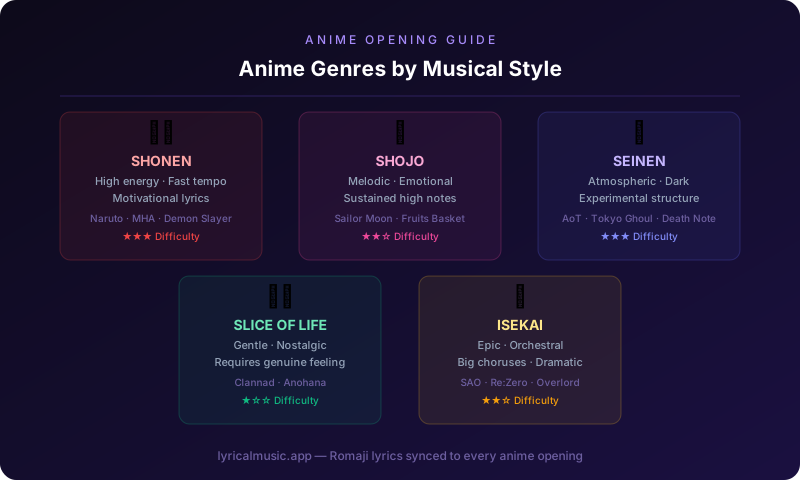
Anime Opening Styles and What to Expect
Shonen battle anime: High energy, fast tempo, motivational lyrics. Think Naruto, Demon Slayer, My Hero Academia. These songs get you pumped. They are also technically challenging — fast vocals, complex rhythms, high notes.
Shojo romance: Melodic, emotional, often slower. Think Sailor Moon, Cardcaptor Sakura, Fruits Basket. These songs focus on feelings and relationships. They are vocally demanding in different ways — sustained notes, emotional delivery, delicate phrasing.
Seinen/psychological: Atmospheric, often darker. Think Tokyo Ghoul, Attack on Titan, Death Note. These openings set mood more than tell stories. They can be experimental, unpredictable, and rewarding to master.
Slice of life: Gentle, nostalgic, comforting. Think Clannad, Anohana, March Comes in Like a Lion. These songs sneak up on you emotionally. They seem simple but require genuine feeling to perform well.
Isekai: Epic, orchestral, grand. Think Sword Art Online, Re:Zero, Overlord. These openings promise adventure and discovery. They often have big choruses and dramatic builds.
Best Anime Openings by Difficulty
Beginner — clear vocals, moderate tempo:
"Gurenge" by LiSA (Demon Slayer) — The gold standard. Clear enunciation, memorable melody, emotional delivery that is achievable without being overwhelming.
"Blue Bird" by Ikimono-gakari (Naruto Shippuden) — Upbeat and optimistic. The chorus is simple and repetitive in the best way.
"Again" by Yui (Fullmetal Alchemist: Brotherhood) — Moderate tempo with clear vocals. Good for practicing sustained notes.
"Departure" by Masatoshi Ono (Hunter x Hunter) — Gentle and encouraging. Good for building confidence.
"Cruel Angel's Thesis" by Yoko Takahashi (Neon Genesis Evangelion) — Iconic, slightly faster but manageable. Every anime fan should know this.
Intermediate — faster tempo, more complex:
"Silhouette" by KANA-BOON (Naruto Shippuden) — Faster, energetic, requires breath control. The guitar riff is iconic.
"Peace Sign" by Kenshi Yonezu (My Hero Academia) — Complex rhythm, rapid verses, satisfying chorus.
"Kaikai Kitan" by Eve (Jujutsu Kaisen) — Modern sound, intricate, challenging but rewarding.
"Inferno" by Mrs. GREEN APPLE (Fire Force) — High energy, requires power and breath control.
"The Day" by Porno Graffitti (My Hero Academia) — Classic rock energy, good range practice.
Advanced — fast, complex, demanding:
"Shinzou wo Sasageyo" by Linked Horizon (Attack on Titan) — Epic, orchestral, technically demanding. The chant sections are legendary.
"Otomodachi Film" by Oishi Masayoshi (My Hero Academia) — Unpredictable structure, requires versatility.
"Chase" by Batta (JoJo's Bizarre Adventure) — JoJo openings are always weird and challenging.
"Sign" by FLOW (Naruto Shippuden) — Fast, emotional, requires precision.
"Kiss of Death" by Mika Nakashima x Hyde (Darling in the Franxx) — Vocally demanding, dramatic range required.
How to Learn an Anime Opening Step by Step
Step 1: Watch the opening
Do not try to sing yet. Just watch. Notice how the lyrics connect to the visuals. Notice the rhythm and energy. Feel the song.
Step 2: Listen without visuals
Close your eyes. Focus on the vocals. Notice when the singer breathes. Notice which syllables get stretched. Japanese songs often hold final vowels.
Step 3: Learn the chorus first
Choruses repeat. They are designed to be memorable. Learn the chorus before the verses. You will get more practice per minute of effort.
Step 4: Use romaji lyrics
Find synced lyrics with romaji. Read the phonetic spelling while you listen. Do not worry about meaning yet. Focus on sounds.
Step 5: Sing along slowly
Use your app's slowdown feature if available. Half speed lets you hear every syllable. Gradually increase to full speed.
Step 6: Record yourself
Your voice sounds different in your head than on recording. Listen back. Compare to the original. Adjust. Repeat.
Step 7: Sing with the opening animation
Put it all together. Watch the opening and sing along. Time your words to match the animation. This is the payoff moment.
The Connection Between Lyrics and Story
Anime openings often contain spoilers, foreshadowing, or thematic elements that only make sense after you have watched the show. Learning the lyrics adds layers to your understanding.
"Gurenge" references demons and redemption before you understand the full story. "Shinzou wo Sasageyo" commands dedication of hearts — a theme that becomes devastatingly relevant. "Unravel" asks "who am inside" — the central question of Tokyo Ghoul.
Singing these songs connects you to the narrative on a deeper level. You are not just watching the story. You are expressing it with your voice.
What Lyrical Does Differently
Most lyrics apps do not understand anime culture. They treat anime songs as random J-pop tracks. Lyrical was built by people who understand that anime openings are their own art form.
Real-time sync: Lyrics highlight as they are sung. You never lose your place, even in 90-second TV-size openings that move fast.
Romaji built-in: Japanese lyrics with phonetic spelling underneath. No switching to anime lyric sites. No copying from forums.
Word-by-word karaoke: Each word lights up individually. You know exactly when to sing that dramatic opening note.
Dynamic Island: Lyrics float on your screen while you rewatch episodes. Check notifications without pausing your practice.
CarPlay: Lyrics on your car's display. Anime road trip sing-alongs with friends who understand.
Haptic feedback: Your phone pulses with the beat. You feel the opening energy even when you are not looking at the screen.
The specific thing Lyrical does that nothing else does: it treats anime music with the respect it deserves. These are not just songs. They are the emotional entry point to stories that matter to millions of people.
Common Questions About Singing Anime Openings
Do I need to learn Japanese to sing anime openings?
No. Romaji lets you pronounce Japanese words using English letters. You can sing along to hundreds of openings without understanding the language. Many fans learn Japanese later, but romaji gets you singing immediately.
What is the easiest anime opening to learn?
"Gurenge" is the most popular choice for good reason. Clear vocals, moderate tempo, emotionally powerful. "Blue Bird" is also beginner-friendly — upbeat and catchy.
How long does it take to learn an anime opening?
The chorus takes a few days. A full TV-size opening takes one to two weeks. The full song (if you want the full version) takes longer. Consistency matters more than speed.
Why do some openings use English words?
Japanese pop culture often mixes English into songs. It sounds cool to Japanese audiences. For English speakers, these moments give you easy wins while learning.
Can I learn Japanese through anime songs?
You will pick up vocabulary and get used to Japanese sounds. But anime Japanese is dramatic and stylized, not conversational. You will learn "shinzou wo sasageyo" before you learn how to ask for directions. Use songs as a supplement, not a curriculum.
What if my favorite opening is not in the app?
Popular openings get added quickly. Seasonal anime songs appear within days of airing. Older classics are usually already in the database. You can request additions through the app.
Should I learn the full song or just the TV size?
Start with TV size (90 seconds). That is what plays before episodes. Once you have that down, learn the full version if you want. Most fans only need the TV size.
How do I sing the high notes?
Anime openings often have dramatic high notes. Do not strain. Sing in your comfortable range. The emotion matters more than hitting the exact pitch. With practice, your range will expand naturally.
The Bottom Line
Anime openings are designed to be sung along to. They are catchy, emotional, and memorable. Romaji makes them accessible even if you do not know Japanese. Start with easier songs, work up to harder ones, and use an app that shows synced lyrics.
The feeling of singing "Gurenge" while the Demon Slayer opening plays, your voice matching LiSA's energy, understanding why this song broke records? That is the anime fan experience. Lyrical gets you there.
Try Lyrical Free
Lyrical shows real-time synced lyrics with romaji for anime openings, J-pop, and more. Dynamic Island, CarPlay, and word-by-word karaoke mode included.
Download Lyrical and sing along to your first anime opening today.
*Last updated: March 2026*