Demon Slayer Opening Songs: How to Sing Along
Want to sing along to Demon Slayer openings? Here's how to learn 'Gurenge,' 'Zankyou Sanka,' and other Kimetsu no Yaiba songs using romaji, plus tips for LiSA's powerful vocal style.
Demon Slayer Opening Songs: How to Sing Along
You can sing along to Demon Slayer openings by using romaji — phonetic Japanese spelling that lets you pronounce lyrics using English letters. Start with "Gurenge," the iconic Season 1 opening by LiSA. Its clear vocals, moderate tempo, and emotional delivery make it perfect for learning. Then move on to "Zankyou Sanka" and other openings from the series.
That is the short answer. But if you have watched Demon Slayer, you know "Gurenge" hits different. The opening sequence with Tanjiro running through the snow. The chorus building to that emotional peak. You want to sing it, not just listen.
This guide will get you there. From "Gurenge" to "Zankyou Sanka" to "Kizuna no Kiseki," here is how to sing every Demon Slayer opening.
What Most Fans Get Wrong About Singing Demon Slayer Openings
The biggest mistake is thinking LiSA's vocals are impossible to match. She is a powerhouse vocalist, yes, but "Gurenge" is actually well-structured for learning. The verses build gradually. The chorus is memorable and repetitive. You do not need LiSA's range to sing along enjoyably.
Another mistake is ignoring the breathing technique. LiSA songs require breath control. The phrases are long, the notes are sustained. You need to plan your breathing or you will run out of air mid-line.
The third mistake is not watching the opening animation while learning. Demon Slayer openings are visual masterpieces. The lyrics connect to specific moments — Tanjiro's determination, Nezuko's transformation, the Hashira's power. Watching helps you remember.
The Counterintuitive Thing About "Gurenge"
"Gurenge" became the best-selling anime song of all time for a reason. It captures the emotional core of Demon Slayer — tragedy, determination, hope. When you sing about "red lotus" blooming even in darkness, you are singing about Tanjiro's journey.
Here is what surprised me: "Gurenge" is actually easier to learn than it sounds. The verses are spoken-sung, almost conversational. The pre-chorus builds predictably. The chorus repeats key phrases. LiSA designed it for maximum impact and memorability.
The emotional journey of learning "Gurenge": frustration at first because LiSA makes it sound effortless. Then you realize the structure is logical. Then you sing the chorus and feel the power of the song. Then you cannot stop singing it.
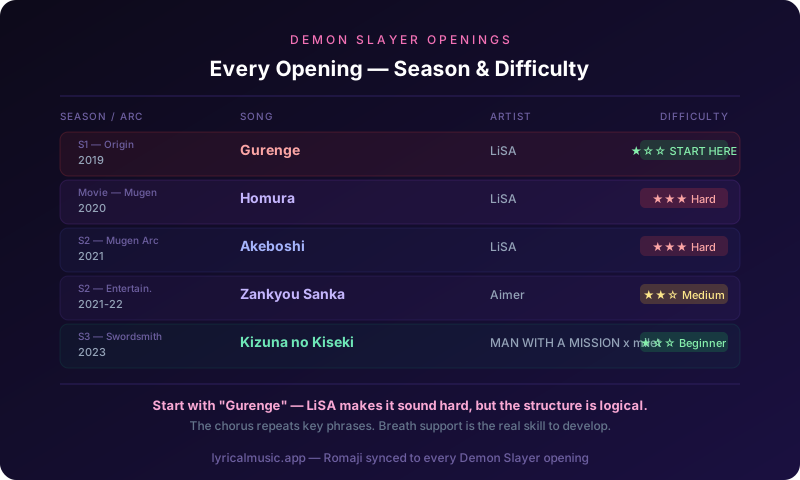
All Demon Slayer Openings Ranked by Difficulty
Beginner — clear and melodic:
"Gurenge" by LiSA (Season 1) — The standard. Clear vocals, moderate tempo, emotionally powerful. Start here.
"Kizuna no Kiseki" by MAN WITH A MISSION x Milet (Season 3) — Recent opening with accessible melody. The blend of rock and pop makes it approachable.
Intermediate — more challenging:
"Zankyou Sanka" by Aimer (Season 2, Entertainment District Arc) — Aimer's breathy, emotional style requires control. The chorus soars.
"Mugen" by MY FIRST STORY x HYDE (Season 3 movie) — Rock energy with powerful vocals. Requires breath support.
Advanced — technically demanding:
"Homura" by LiSA (Mugen Train movie) — The emotional peak of the series musically. Vocally demanding, wide range, requires genuine feeling.
"Akeboshi" by LiSA (Season 2 opening variation) — Slower but emotionally intense. Every note matters.
How to Approach LiSA's Vocal Style
LiSA is the voice of Demon Slayer. Understanding her style helps you sing her songs better.
Power without strain: LiSA sings with power but does not sound forced. She uses breath support and resonance, not throat tension.
Emotional authenticity: She delivers lyrics like she means them. Technical skill matters less than genuine feeling.
Dynamic range: She can whisper or belt. "Gurenge" uses both — intimate verses, explosive chorus.
Long phrases: She plans her breathing to sustain long lines. You need to do the same.
How to practice:
Start with breath control exercises. LiSA songs require air. Practice sustaining notes. Plan where to breathe in each phrase.
Then work on dynamics. Sing the verses quietly, almost speaking. Build to the chorus. Match the emotional arc of the song.
Do not try to sound exactly like LiSA. Her voice is unique. Focus on delivering the emotion authentically in your own voice.
The Meaning Behind the Lyrics
Understanding the lyrics adds depth to your singing:
"Gurenge" — "Red Lotus." The lotus blooms in muddy water, symbolizing beauty emerging from hardship. Tanjiro's family is killed by demons. He becomes a demon slayer to protect others and find a cure for his sister. The song is his determination made music.
"Zankyou Sanka" — "Echoing Praise Song." The Entertainment District Arc focuses on Tengen Uzui and his flashy style. The song celebrates living boldly while acknowledging pain.
"Kizuna no Kiseki" — "Bonds and Miracles." The Swordsmith Village Arc emphasizes relationships — Tanjiro and Nezuko, the Hashira, the swordsmiths. The song celebrates these connections.
"Homura" — "Flame." The Mugen Train movie's emotional climax. The song mourns loss while celebrating sacrifice. It is devastating and beautiful.
Singing these songs connects you to the story. You are not just pronouncing words. You are expressing the emotions that make Demon Slayer resonate with millions.
Using Lyrical to Sing Demon Slayer Songs
Lyrical makes learning Demon Slayer openings easier. LiSA's fast phrases and emotional delivery are hard to follow with static lyrics.
Real-time sync: Lyrics highlight as LiSA sings. You never lose your place, even in "Gurenge's" fastest sections.
Romaji built-in: Japanese lyrics with phonetic spelling underneath. "Gurenge" becomes pronounceable.
Word-by-word karaoke: Each word lights up individually. You know exactly when to hit that emotional peak.
Dynamic Island: Lyrics float on your screen while you rewatch episodes. Check notifications without pausing your practice.
CarPlay: Lyrics on your car's display. Sing along on road trips to Demon Slayer events.
Haptic feedback: Your phone pulses with the beat. You feel LiSA's power in your hand.
The specific thing Lyrical does that nothing else does: it captures the emotional intensity of Demon Slayer music. You are not just reading lyrics. You are experiencing the song.
Common Questions About Singing Demon Slayer Openings
Do I need to learn Japanese to sing "Gurenge"?
No. Romaji lets you pronounce Japanese words using English letters. "Gurenge" is actually very accessible — clear vocals, repetitive chorus, emotional delivery that transcends language.
What is the easiest Demon Slayer opening to learn?
"Gurenge" is the perfect starter. It is LiSA's most iconic anime song for good reason. The structure is logical, the chorus is memorable, and the emotional arc is clear.
How do I sing like LiSA?
Focus on breath control and emotional authenticity. LiSA's power comes from technique and feeling, not forcing your voice. Do not try to match her exact sound. Deliver the emotion in your own voice.
Why is "Gurenge" so popular?
It perfectly captures Demon Slayer's emotional core — tragedy, determination, hope. The melody is instantly memorable. LiSA's delivery is powerful. It became the best-selling anime song of all time because it resonates.
Can I learn Japanese through anime songs?
You will pick up words and phrases. "Gurenge" teaches "guren" (red lotus), "yami" (darkness), "hana" (flower). But anime Japanese is poetic, not practical. Use songs as a supplement, not a curriculum.
What if my favorite opening is not in the app?
Demon Slayer is one of the biggest anime franchises. All openings appear in lyrics databases quickly. LiSA's songs are especially well-documented.
How long does it take to learn "Gurenge"?
The chorus takes a few days. The full TV-size opening takes one to two weeks. The full song (if you want it) takes longer. Be patient — the satisfaction of nailing that final chorus is worth it.
Should I learn the full song or just the TV size?
Start with TV size (90 seconds). That is what plays before episodes. Once you have that down, learn the full version if you want. Most fans only need the TV size.
The Bottom Line
You can sing Demon Slayer openings without knowing Japanese. Romaji makes them accessible. "Gurenge" is the perfect starting point — clear, emotional, memorable. Work up to harder songs like "Zankyou Sanka" and "Homura." Use an app that shows synced lyrics.
The feeling of singing "Gurenge" while the opening plays, your voice matching LiSA's power, understanding why this song broke records? That is the Demon Slayer fan experience. Lyrical gets you there.
Try Lyrical Free
Lyrical shows real-time synced lyrics with romaji for Demon Slayer openings and thousands of other anime songs. Dynamic Island, CarPlay, and word-by-word karaoke mode included.
Download Lyrical and sing along to "Gurenge" today.
*Last updated: March 2026*