Naruto Openings: The Complete Singing Guide
Want to sing along to Naruto openings? Here's how to learn 'Blue Bird,' 'Silhouette,' 'Sign,' and other iconic Naruto and Naruto Shippuden songs using romaji and vocal techniques.
Naruto Openings: The Complete Singing Guide
You can sing along to Naruto openings by using romaji — phonetic Japanese spelling that lets you pronounce lyrics using English letters. Start with "Blue Bird" by Ikimono-gakari, "Silhouette" by KANA-BOON, or "Sign" by FLOW. The series has over 20 openings across Naruto and Naruto Shippuden, offering everything from energetic rock to emotional ballads.
That is the short answer. But if you grew up with Naruto, these songs are not just anime openings. They are the soundtrack to your childhood. The "Blue Bird" that played during the Pain arc. The "Silhouette" that accompanied Naruto's final battles. The "Sign" that marked Jiraiya's legacy.
This guide will get you there. From "R★O★C★K★S" to "Blood Circulator" to "Kara no Kokoro," here is how to sing every Naruto opening.
What Most Fans Get Wrong About Singing Naruto Openings
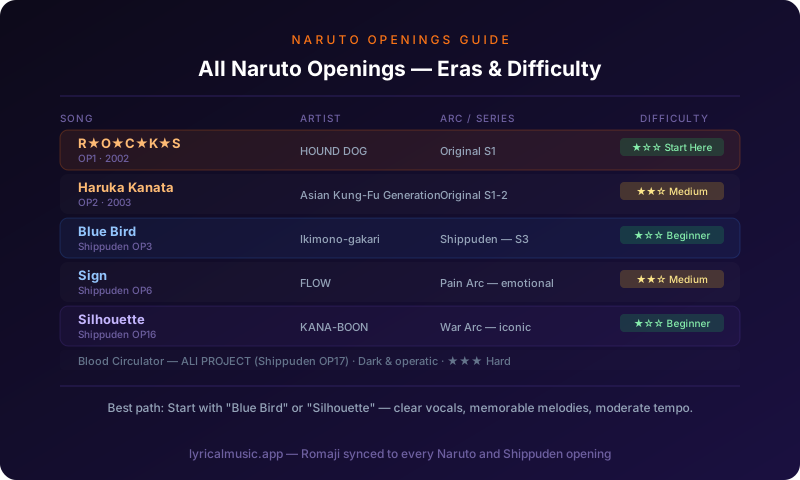
The biggest mistake is thinking all Naruto openings sound the same. The original Naruto (2002-2007) has a different musical identity from Shippuden (2007-2017). Early openings are more pop-oriented. Shippuden openings get progressively more rock and emotional.
Another mistake is skipping the original Naruto openings. Everyone knows Shippuden songs, but the original series has gems like "Haruka Kanata" and "GO!!!" that deserve attention.
The third mistake is not preparing for the emotional weight. Naruto openings carry 15+ years of memories for fans. Singing "Sign" might hit harder than you expect. "Blue Bird" might make you think about loss and perseverance.
The Counterintuitive Thing About Naruto Music
Naruto openings evolved with the story. Early songs capture youthful energy and mischief. Middle songs reflect growing up and facing harder challenges. Late songs carry the weight of final battles and resolutions.
Here is what surprised me: the most popular Naruto openings are not necessarily the most complex musically. "Blue Bird" is beautiful but structurally simple. "Silhouette" is catchy but not technically demanding. Their power comes from emotional association.
The emotional journey of learning Naruto openings: nostalgia hits immediately. Then you focus on the technique. Then you sing and the memories flood back. Then you understand why these songs stayed with you.
Essential Naruto Openings by Era
Original Naruto (2002-2007):
"R★O★C★K★S" by Hound Dog — The very first opening. Sets the ninja tone immediately.
"Haruka Kanata" by Asian Kung-Fu Generation — Energetic, iconic, beloved by fans.
"Kanashimi wo Yasashisa ni" by little by little — "Turning Sadness into Kindness." Emotional growth.
"GO!!!" by FLOW — High energy, perfect for the Chunin Exams arc.
"Seishun Kyousoukyoku" by Sambomaster — "Youth's Rhapsody." Captures Naruto's spirit.
Early Shippuden (2007-2011):
"Hero's Come Back!!" by nobodyknows+ — Marks the return, high energy.
"Blue Bird" by Ikimono-gakari — The most popular Naruto opening. Beautiful, hopeful, iconic.
"Closer" by Joe Inoue — English-Japanese mix, catchy, memorable.
"Sign" by FLOW — Jiraiya's arc. Emotional weight, powerful delivery.
"Toumei Datta Sekai" by Motohiro Hata — "The World That Was Transparent." Melodic, growing maturity.
Middle Shippuden (2011-2014):
"Diver" by NICO Touches the Walls — About diving into darkness to find light.
"Lovers" by 7!! — Sweet, romantic, different tone for the series.
"Not Even Sudden Rain Can Defeat Me" by NICO Touches the Walls — Long title, emotional content.
"Assault Rock" by THE CRO-MAGNONS — High energy, action-focused.
Late Shippuden (2014-2017):
"Silhouette" by KANA-BOON — The most popular Shippuden opening. Iconic guitar riff, viral on TikTok.
"Kaze" by Yamazaru — "Wind." Reflective, approaching the end.
"Blood Circulator" by Asian Kung-Fu Generation — Return of a legendary band for the finale.
"Kara no Kokoro" by Anly — "Empty Heart." The final opening. Bittersweet.
How to Approach Naruto Openings
Start with "Blue Bird" — It is the most popular for good reason. Beautiful melody, moderate difficulty, emotional resonance.
Add "Silhouette" — The Shippuden equivalent. Catchy, energetic, modern classic.
Learn "Sign" — For the emotional depth. Jiraiya's legacy in musical form.
Explore by arc — Each opening corresponds to story arcs. Pick songs from your favorite moments.
Practice the English sections — Many openings mix English and Japanese. "Closer" is partially in English. Easy wins while learning.
The Meaning Behind the Lyrics
Understanding deepens your connection:
"Blue Bird" — Hope and freedom. The blue bird represents happiness just out of reach, worth chasing.
"Silhouette" — Running toward your future. The silhouette is who you are becoming.
"Sign" — Legacy and continuation. Jiraiya's will lives on through Naruto.
"Haruka Kanata" — "Far Beyond." Looking past current struggles to distant goals.
"Blood Circulator" — Life force and connection. The finale's reflection on bonds formed.
Singing these songs connects you to Naruto's themes. Perseverance, friendship, legacy, and never giving up on your dreams.
Using Lyrical to Sing Naruto Songs
Lyrical makes learning Naruto openings easier. The emotional weight and long history are hard to navigate with static lyrics.
Real-time sync: Lyrics highlight as sung. You never miss the "Blue Bird" chorus.
Romaji built-in: Japanese lyrics with phonetic spelling. "Silhouette" becomes pronounceable.
Word-by-word karaoke: Each word lights up. You know exactly when to sing.
Dynamic Island: Lyrics float while you rewatch episodes. Check notifications without pausing.
CarPlay: Lyrics on your car's display. Road trip sing-alongs with fellow ninja.
Haptic feedback: Your phone pulses with the beat. You feel the chakra flowing.
The specific thing Lyrical does: it respects the legacy. Naruto deserves accurate, well-synced lyrics. Lyrical delivers.
Common Questions About Singing Naruto Openings
Do I need to learn Japanese to sing Naruto openings?
No. Romaji lets you pronounce Japanese words using English letters. "Blue Bird" and "Silhouette" are accessible even for beginners.
What is the easiest Naruto opening to learn?
"Blue Bird" is the perfect starter. Beautiful, memorable, moderate difficulty. "Silhouette" is also beginner-friendly.
What is the most popular Naruto opening?
"Blue Bird" for the original series, "Silhouette" for Shippuden. Both are iconic for good reason.
How many Naruto openings are there?
9 for original Naruto, 20 for Shippuden, plus various endings and movies. Over 30 songs total.
Can I learn Japanese through Naruto songs?
You will pick up words and phrases. Ninja vocabulary, friendship terms, perseverance language. Use songs to supplement formal learning.
What if my favorite opening is not in the app?
Naruto is one of the biggest anime franchises. All major openings appear in lyrics databases.
How long does it take to learn "Blue Bird"?
The chorus takes days. The full song takes one to two weeks. It is designed to be memorable.
Should I learn the full song or just the TV size?
Start with TV size (90 seconds). Learn full versions of favorites like "Blue Bird" if desired.
The Bottom Line
You can sing Naruto openings without knowing Japanese. Romaji makes them accessible. "Blue Bird" and "Silhouette" are essential starting points. Explore by era and emotional resonance. Use an app that shows synced lyrics.
The feeling of singing "Blue Bird" while remembering Naruto's journey, joining millions of fans who grew up with these songs? That is the ninja way. Lyrical gets you there.
Try Lyrical Free
Lyrical shows real-time synced lyrics with romaji for Naruto openings and thousands of other anime songs. Dynamic Island, CarPlay, and word-by-word karaoke mode included.
Download Lyrical and become the next Hokage of karaoke today.
*Last updated: March 2026*